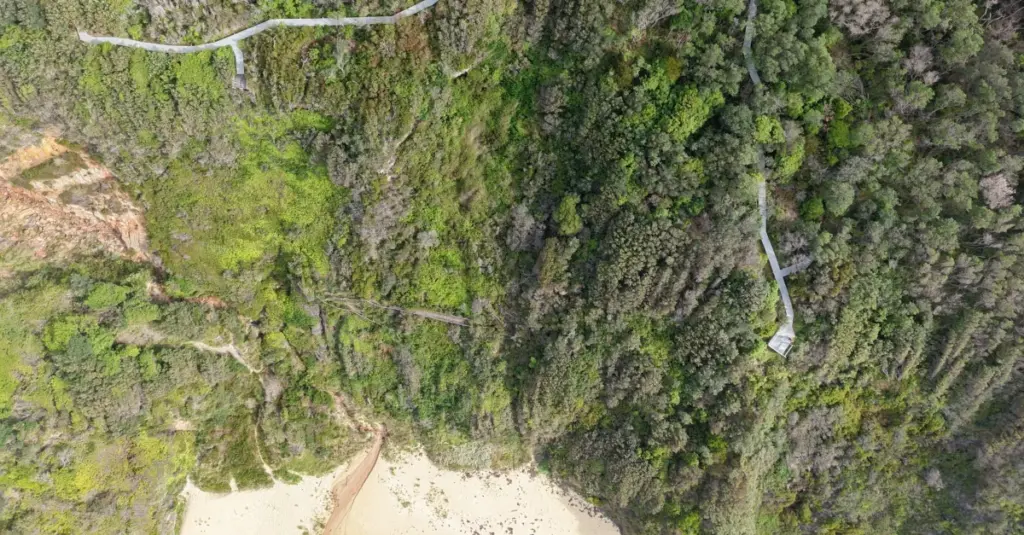

At Anchor Products, we believe the materials we choose today shape the world we live in tomorrow.
That’s why our Fibre-Reinforced Polymer (FRP) range is designed not only for structural performance in harsh conditions—but for long-term sustainability. In civil, marine and industrial infrastructure projects, FRP offers a compelling alternative to traditional materials, delivering strength, corrosion resistance and environmental benefits in equal measure.
What Makes FRP Sustainable?
✅ Lower Embodied Carbon
Independent life-cycle assessments (LCA) have shown that FRPreinforcement can outperform steel and concrete in the majority of environmental impact categories, especially when used with seawater-mixed concrete or in corrosion-prone environments. This leads to fewer emissions across the entire life of a project, from transport and installation to operation and end-of-life.
✅ Durability that Reduces Waste
FRP doesn’t rust, rot, or degrade in saltwater or high-humidity settings. This means longer service life, less frequent maintenance, and reduced resource use over time. Whether it’s a public footbridge, a boat ramp, or a jetty in a tidal zone—FRP lasts longer and requires less intervention.
✅ Lightweight & Efficient
FRP components are up to 80% lighter than steel, reducing the need for heavy equipment during transport and installation. Fewer delivery loads, faster site works, and safer handling all translate to lower energy use and carbon output on your job site.
✅ Waste-Free Manufacturing
Anchor Products manufactures AnchorMax FRP to precise custom profiles using a continuous pultrusion process. This ensures optimal material use with minimal offcuts or waste—delivering efficiency and sustainability before the product even leaves our facility. Likewise AnchorGrate FRP is a molded process – again with custom profiles with limited waste.
Backed by Research. Applied with Confidence.
Recent peer-reviewed research supports FRP’s environmental value:
- Reduced lifecycle CO₂ emissions in structural walls compared to both brick and timber framing
- Improved impact performance in Life Cycle Assessment models when retrofitting existing concrete beams with carbon FRP versus full demolition
- Extended asset service life in high-risk environments like coastlines, wetlands, and corrosive industrial settings
These aren’t just lab results—they reflect what we see every day in field applications across Australia.
Supporting Sustainable Infrastructure Outcomes
We supply our FRP systems to:
- Civil contractors upgrading aging boardwalks and ramps
- Government agencies looking to meet sustainability targets without sacrificing durability
- Designers needing lightweight structural alternatives in sensitive environmental zones
- Water authorities, asset managers and builders demanding long-term, low-maintenance solutions
As climate conditions intensify and regulatory expectations increase, FRP helps projects meet environmental KPIs, reduce lifecycle costs, and improve durability in the toughest conditions.
Looking Ahead: Recyclability & Innovation
While FRP has historically posed recycling challenges, Anchor Products is committed to innovation:
- We’re actively tracking developments in recycling of fibre and resin components
- We design for minimal waste and long service life as the first pillars of circular construction
By choosing FRP today, you’re investing in the future of infrastructure and the planet.
Build Smarter. Build Cleaner. Build with Anchor.
Explore our FRP product range or speak with our team to discuss how FRP can contribute to your next project’s environmental and engineering outcomes.
Contact Us – sales@anchorproducts.com.au
Visit the Resource Centre – https://anchorproducts.com.au/resource-centre/
Browse our FRP Systems on the home page